Ads allow content creators to provide free useful and compelling content to the public. We may earn money or products from the companies mentioned in this post. See the Affiliates and Disclosures page in the top menu of this website for detailed information.
Crochet hand pain relief tips no one is telling you
If you crochet for hours at a time week after week you know the feeling crochet wrist pain. The feeling of arms that are spent, wrists that don’t have any more to give and various shoulder complaints.
I have the solutions (the normal ones you hear everywhere) but let’s go beyond that.
Crochet should feel relaxing, not painful—but over time, repeated motions and poor support can catch up with your hands, wrists, and shoulders. Whether you’re new to crochet or a seasoned maker working through a big project, these five tips can help you stay comfortable and pain-free.
Imagine breezing through your next garment, blanket, holiday gifts and other long crochet projects with minimal discomfort!
Table of Contents
1. The Traditional Tips — Because They Really Do Work
Sometimes the classic advice is classic for a reason. One of the simplest yet most effective ways to reduce wrist and hand pain is by taking regular breaks. Give your hands and wrists a chance to rest and recover by setting a gentle reminder every 30 minutes. When the timer goes off, pause your stitching and try a few easy movements: stretch your fingers, rotate your wrists, shake out your arms. These micro breaks support circulation and help reset muscle tension before it builds up.
Posture also plays a huge role in how your body feels during longer crochet sessions. Choose a chair that offers solid back support and sit with your shoulders relaxed—not hunched. Keeping your work at a comfortable height can help prevent neck and shoulder strain, so you can enjoy your crochet time without paying for it later.
I encourage you to read this post on why hobbies are so important and how they help cognitive function with age among many other benefits!
2. Try Compression Crafter Gloves — with Realistic Expectations
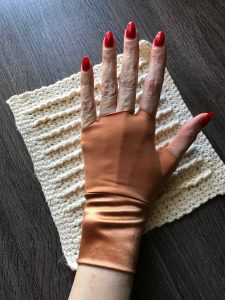
Discomfort severity can vary depending on your body size, how you hold your hook, and how you feed your yarn. But one supportive tool many crocheters swear by is compression gloves. These gloves provide gentle pressure and warmth that can increase circulation and reduce inflammation during shorter sessions.
That said, they’re not always ideal for marathon crochet nights. While they work well during focused sessions, they might feel a bit restrictive if you’re planning to crochet through a full Netflix binge. Keep a pair on hand (pun intended), but be open to combining them with other strategies on this list for longer comfort.
Crafter gloves like these certainly do offer some support but they aren’t comfortable for longer stretches that happen during a Netflix binge.

I designed project trackers! This is the large print version for tired eyes. So much easier than using apps, scraps of paper or a plain notebook.
Three project sizes, a handy ruler and hook guide inside the cover and plenty of rooms for notes in each pattern.
Buy it here.
Regular size print here.
I have had bad eyesight since age 18 so large print is a godsend when you can’t see apps and dark yarn, let alone going from one to the other on a crochet-a-thon during a netflix binge.
3. Support Your wrists and forearms with a Waist Pillow
Crocheting for hours can sneakily wear on your lower back. Even with great posture, your spine needs a little love. Using a waist support pillow helps encourages proper alignment as you work.
Place the pillow around your midsection, especially if you’re on a soft couch or armless chair. A supportive firm waist pillow gives your whole upper body support—which, in turn, takes pressure off your hands and wrists. It’s a small adjustment with big ripple effects across your whole crafting session.
I found this solution and it’s been a real crochet game changer! I did try one desperate day (I really needed to finish but my arms were spent) so I grabbed a body pillow from the bed and wrapped it around my torso like a horseshoe and voila! What a difference. All the pressure was off my forearms and my wrists breathed a sigh of relief.
While the body pillow works in a pinch it is not a long term solution. It is bunchy, awkward and isn’t meant to folded around your waist but something is! A nursing pillow. I got a high quality one called a boppy because lesser quality pillows I know from experience just don’t give the right support.
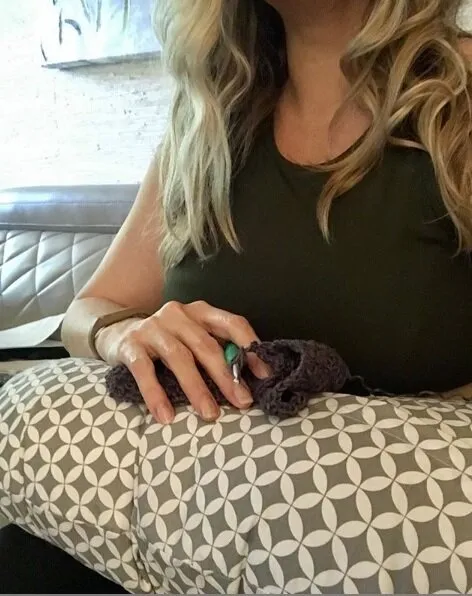
It’s made of course to fit around the midsection and has a great firmness that really supports the forearms and wrist placement. It is meant to support a baby so of course it is going to support those sore arms and wrists.
The boppy works so well because of the height, it positions your wrists, hands and arms. You may have to tweak how you hold your tools but try this first instead of trying to spend weeks training yourself to knit or crochet another way.
4. Use a Smooth, Lightweight Hook to Reduce Tension
Not all crochet hooks are created equal. A smooth metal hook or one with a soft ergonomic handle can significantly reduce hand tension—especially when working with grippy yarns or dense stitches.
Lighter hooks with comfortable grips allow your hands to move more naturally, which means less fatigue and more ease during long sessions. Everyone’s hand anatomy is different, so don’t be afraid to experiment with hook styles until you find one that feels right.
Hook quality matters. Working with very smooth metal hooks over value hooks or wood hooks makes a difference. Not only do smooth hooks allow you to work more quickly as you speed through stitches but there is less effort required to use them.
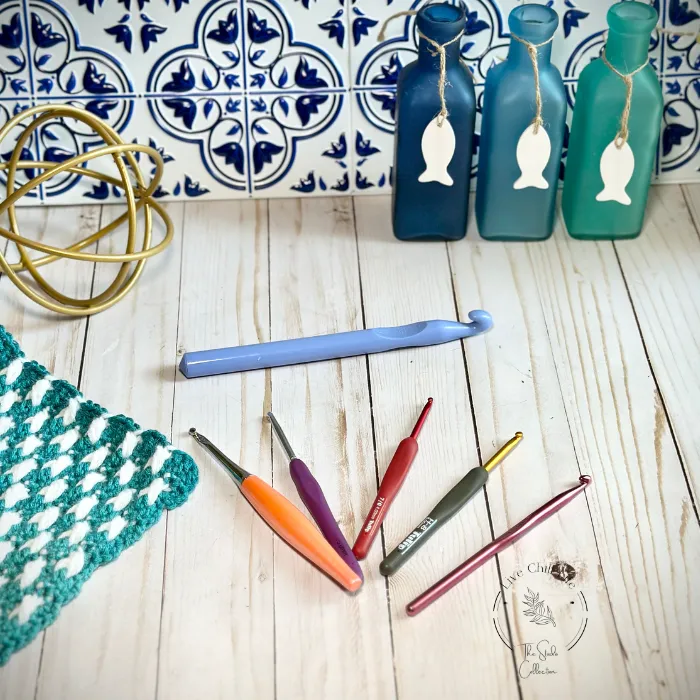
Ergonomic handles make crochet hooks more comfortable to hold but if you are working hard with metal that grabs and splits yarns you will be using more wrist tension to work each and every stitch.
This is why some hooks have a higher price point. It is the hook part itself (sometimes the handle can increase price). They need not be budget breaking but they will cost a few dollars more than standard or value hooks. My favorite smooth hook is the etimo red series. Even if you can just get 2-3 smooth metal hooks in your most used sizes it will make a big difference in how much effort you need to exert with each stitch.
How I crocheted this big project in 3 weeks no NO PAIN
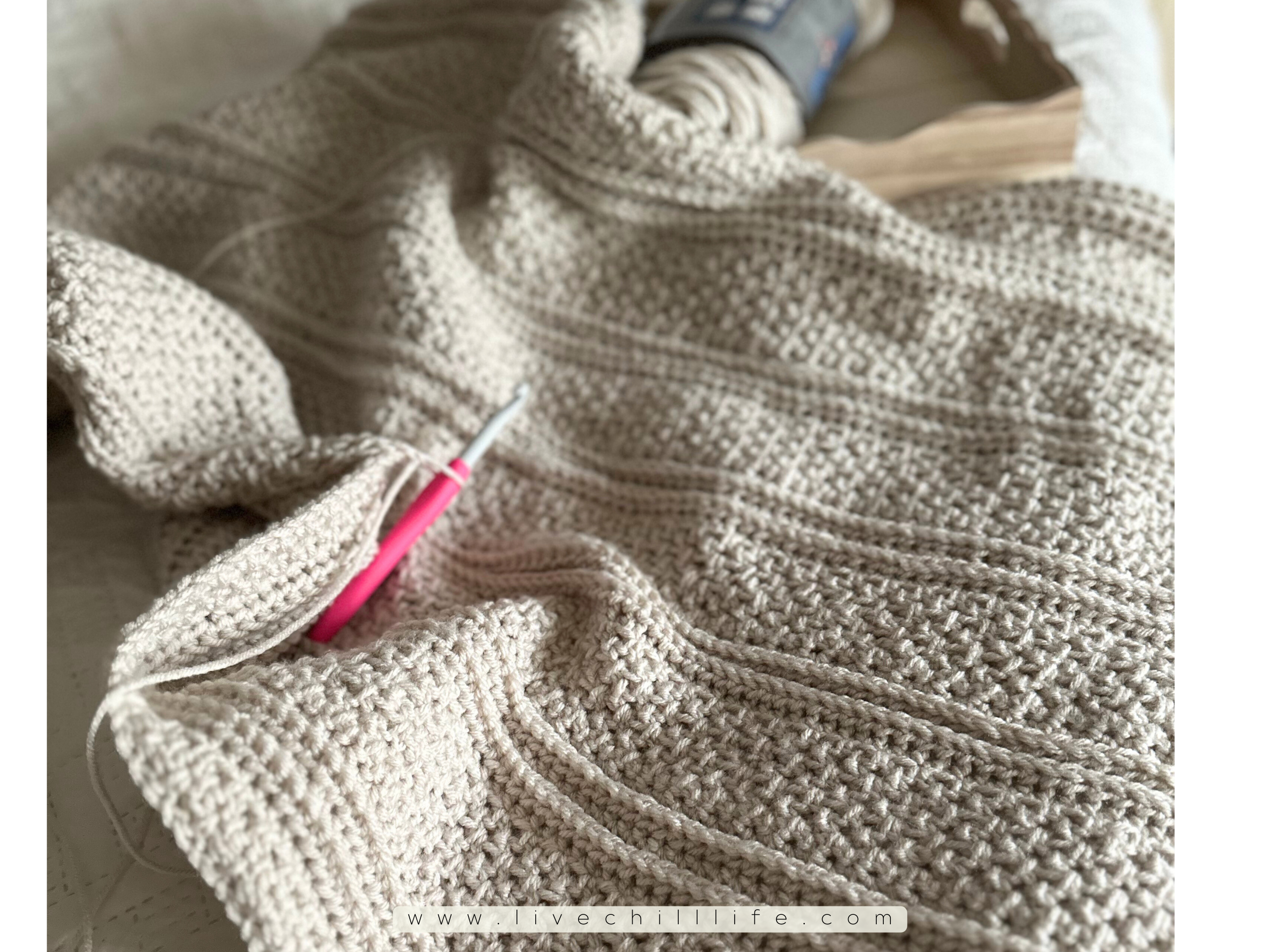
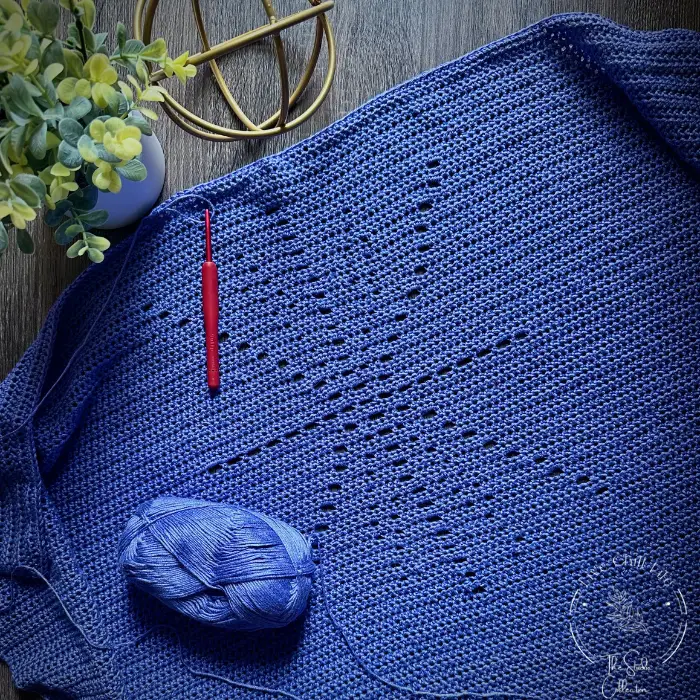
I designed this crochet poncho earlier in 2023 and I made the whole thing in 3 weeks! Sure I have several hours a day to devote to my crochet as it is my profession, but I had zero days off from making this, and not even once did my wrist have discomfort nor did my forearms.
It was all due to using a smooth metal hook. It worked effortlessly through the stitches and didn’t split a yarn that is prone to splitting (that slows your roll too!).
One more secret tip I just learned the hard way in this video.
5. Create a Zero Gravity Position for Your Arms
One of the most overlooked causes of crochet strain is how your arms are positioned while you work. If your forearms are unsupported, your shoulders and wrists take on more of the burden.
A quirky tip that I discovered by accident
While laid up with an injury for several week in my moveable base bed (the kind that folds up like a hospital bed) changed where gravity pulls on my arms and wrists. Don’t run just yet if you don’t have one of these fancy beds.
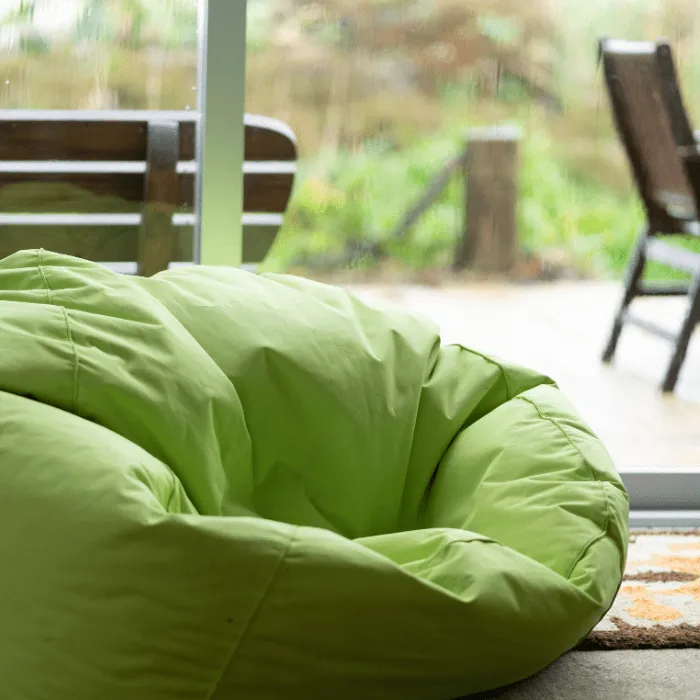
There are ways to mimic this zero gravity position. To shift your back and elbows to simulate zero gravity you can try a bean bag chair or recliner. If you don’t have those you can position yourself on your sofa leaned back a bit and notice how your elbows and forearms are shifted naturally as you crochet.
You should feel your elbows naturally relax at the sides of your body and gravity will pull more against your upper arms and not the working part of your lower arms and wrists.
Try creating a “zero gravity” setup: place pillows or a lap desk under your arms so they stay at a relaxed angle, with no tension pulling them down. This small shift can relieve shoulder pressure and keep your upper body more aligned—especially helpful during long rows or detailed shaping.