
Ads allow content creators to provide free useful and compelling content to the public. We may earn money or products from the companies mentioned in this post. See the Affiliates and Disclosures page in the top menu of this website for detailed information.
Gratitude is a feeling of appreciation and thankfulness for blessings or favors. It is a powerful emotion that can have a profound effect on our lives. Research has shown that showing gratitude can have a variety of benefits, including improving mental health, physical health, relationships, and even productivity!
Table of Contents
1. Gratitude improves mental health
Practicing gratitude helps shift focus from what’s lacking to what’s present and positive. This simple perspective change can reduce symptoms of stress, anxiety, and even depression.
When you regularly acknowledge the good in your life — whether it’s supportive relationships, small daily joys, or personal achievements — your brain begins to build new patterns around optimism instead of worry.
Over time, this mindset fosters resilience, making it easier to handle life’s challenges with calm and clarity.
Practicing Gratitude to Boost Mental Well-Being — APA
2. How gratitude improves physical health
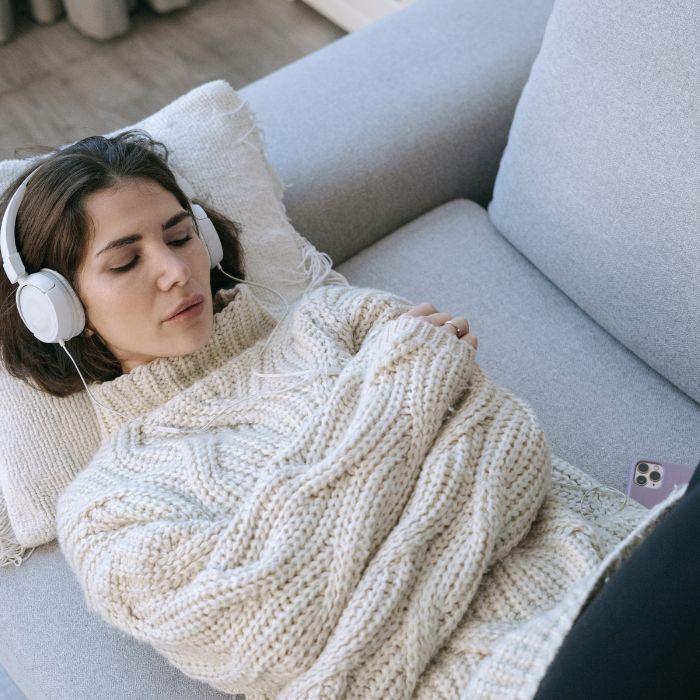
It might sound surprising, but gratitude isn’t just good for the mind — it’s also good for the body. People who regularly practice gratitude often report better sleep, fewer aches and pains, and more consistent energy levels.
Scientists believe that feeling thankful reduces stress hormones and lowers blood pressure, which in turn supports heart health. Grateful people are also more likely to engage in healthy behaviors like exercising, eating well, and keeping medical appointments because they feel their bodies are worth taking care of.
3. Gratitude increases self esteem
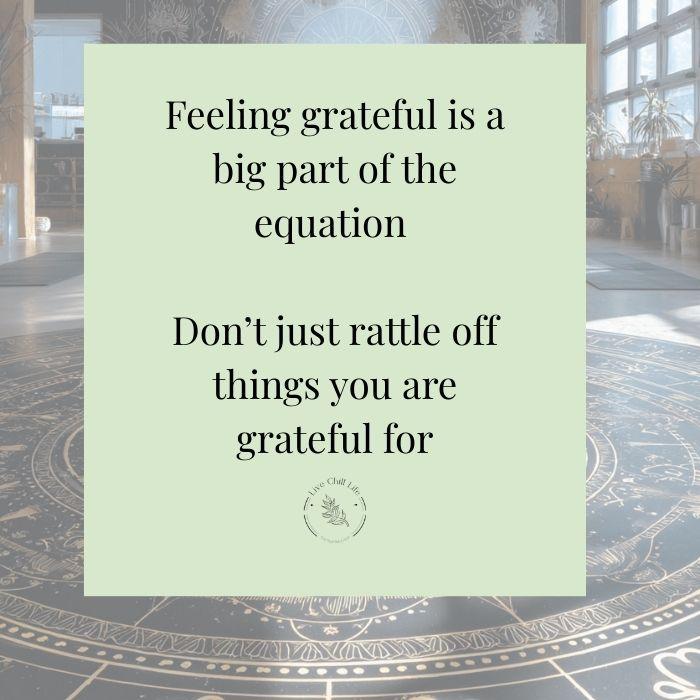
When you practice gratitude, you stop comparing yourself as much to others and start appreciating what you have. This shift builds a healthier sense of self-worth.
Instead of thinking, “I don’t have what they have,” gratitude reframes the thought into, “I’m thankful for what I’ve been given.” Over time, this reduces envy, quiets negative self-talk, and creates a stronger foundation of confidence.
The more you value the unique blessings in your life, the more you believe in your own worth and abilities.
How to use a mala in your gratitude practice
4. Gratitude increases sense of resilience
Life is full of challenges, but gratitude helps us weather the storms more effectively. When you intentionally recognize what’s going well — even in difficult times — it shifts your focus from setbacks to strengths. This positive outlook strengthens resilience, making it easier to recover from stress, disappointment, or loss. Gratitude doesn’t erase hardships, but it provides perspective and hope, reminding you that there are still reasons to keep moving forward.

In my 90 day goal journal that is full of prompts, one of them is to remind yourself each day what is working to help keep your mindset in a gratitude format to propel your success.
5. Gratitude improves relationships
Gratitude has a powerful way of deepening connections with others.
When you express appreciation to friends, family, or colleagues, it strengthens trust and fosters mutual respect. Feeling valued encourages people to invest more into the relationship, creating a positive cycle of kindness and support.
Couples who regularly share gratitude often report higher satisfaction, while friendships and workplace dynamics benefit from the same simple act of saying “thank you.”
Over time, gratitude builds stronger, healthier bonds both personally and professionally.
Greater Good Science Center (UC Berkeley) — hub of gratitude research and practical applications.
Check out this blanket that reminds you to be good to yourself by using a gratitude practice.

6. Gratitude improves sleep
If you struggle with sleep due to a busy mind, the mental calming effect of a gratitude practice can calm a racing. The practice of focusing your brain to all the things are you are grateful food dims the spotlight on your source of worry.
Try spending 15 minutes before you turn off the bedside lamp, devices off, write and feel grateful about your life, reflecting on the day and moments to be grateful for.
See the end of this post for ideas you can do NOW to calm your mind with gratitude.

You may also like A complete guide to better sleep
7. How does gratitude improve anxiety

Anxiety often comes from focusing on what might go wrong in the future or replaying what went wrong in the past. Gratitude helps interrupt this cycle by drawing your attention back to the present moment and highlighting what is stable, safe, or positive right now.
When you practice gratitude — whether by writing in a journal, noting small daily wins, or pausing to appreciate supportive people in your life — you activate areas of the brain linked with calm and contentment. This reduces the intensity of anxious thought patterns and creates a sense of balance.
Over time, gratitude can lower stress hormones and encourage a more grounded perspective, making it easier to manage worry and find peace in everyday life.
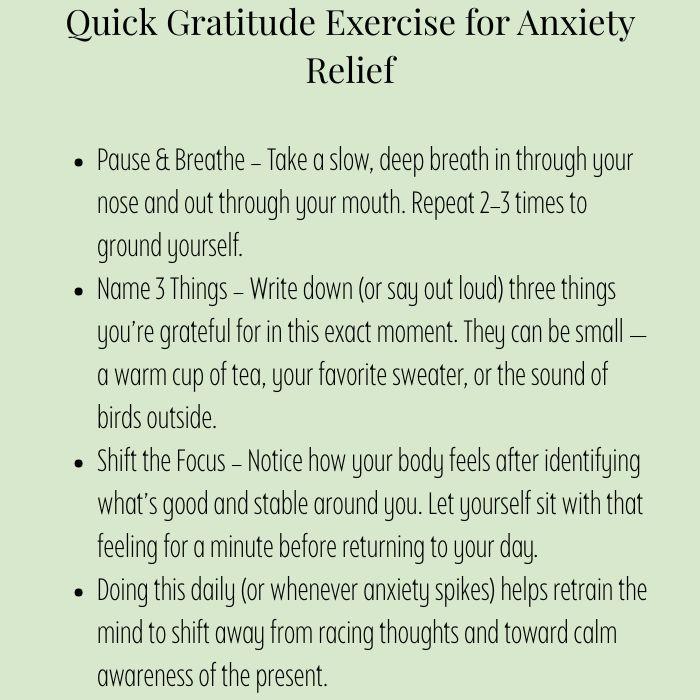
4 Simple Gratitude Practices You Can Start Today
1. The Morning Gratitude Note
Before you pick up your phone or dive into the day, write down one thing you’re thankful for. It could be as simple as “a good night’s sleep” or “the smell of coffee.” Starting the day with gratitude sets a positive tone.
2. Gratitude Walk
Take a 10–15 minute walk and look for things to appreciate around you: a flower blooming, a friendly neighbor, fresh air. Shifting your focus outward while moving your body can quickly calm anxious thoughts.
3. Thank-You Text Challenge
Once a week, send a quick message of thanks to someone in your life — a friend, family member, or colleague. Let them know you appreciate something specific they’ve done. This strengthens relationships while boosting your mood.
4. Bedtime Gratitude Reflection
As you settle in for the night, list three things that went well during the day. Focusing on what worked — rather than what didn’t — helps quiet the mind and improves sleep quality.
You may also like: